The mate seller's call, the aluminum drum on a sunburned shoulder, and the starch biscuit that melts in your mouth: the combo that has defined carioca beaches for decades.
"Olha o mateeee! Ó o mate, doce ou natural!" — this call, muffled by the breaking waves, is the most carioca sound there is. More than any museum or monument, ice-cold mate with Globo biscuit is the sensory experience that connects you to Rio's real beach identity.
Mate: The Walking Tradition
Beach mate is sold by ambulantes who carry two aluminum drums on their shoulders — one with natural mate (bitter, made from yerba mate) and another with sweet mate (sweetened with sugar and lime). It costs R$ 5 to R$ 8 per cup. The drink is icy, slightly bitter or sweet, and strangely refreshing in 38 °C heat. It's served in a plastic cup, drunk standing on the sand, and returned to the vendor. No table, no chair, no ceremony.
The tradition dates back to the 1950s, when immigrants from southern Brazil brought the mate habit to carioca beaches. The original version was hot; the iced adaptation is Rio's invention.
Globo Biscuit: Intangible Heritage
Biscoito Globo has been made since 1953 by the same family, at the factory on Rua do Senado downtown. It's made from polvilho (manioc starch), oil and salt (savory version) or sugar (sweet). The green package is salty; the red is sweet. It's light, crunchy and dissolves in your mouth. In 2017, it was declared Intangible Cultural Heritage of Rio de Janeiro.
Oral tradition insists that Globo biscuit "only tastes right at the beach." And it's true: something in the combination of sea spray, sweat and crunchy polvilho creates a flavor that a supermarket-bought package simply can't replicate. Buy from a beach vendor (R$ 8 to R$ 10 per bag) and eat with your feet in the water.
How to Get There
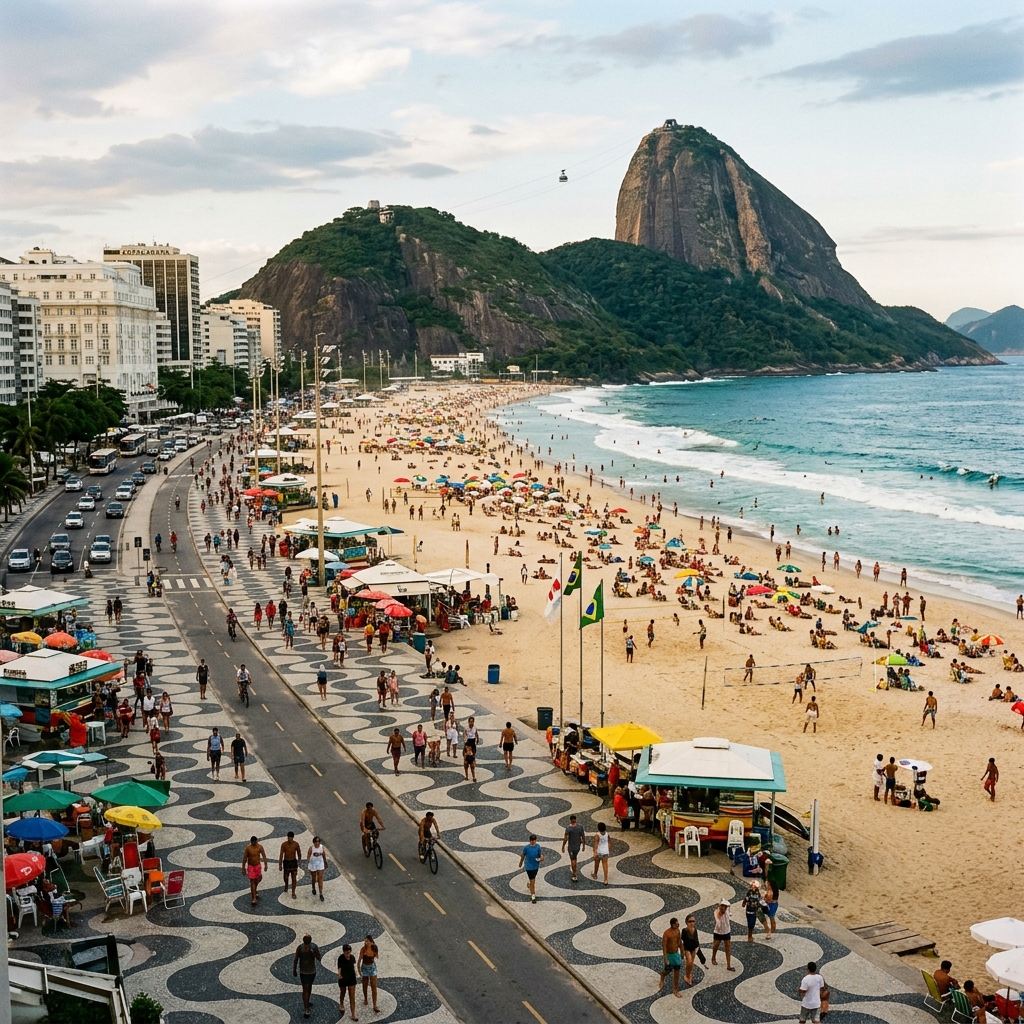
Any South Zone beach works: Copacabana, Ipanema, Leblon, Arpoador. Vendors circulate between 9 AM and 5 PM. On summer weekends, the highest density is between Postos 5 and 7 in Copacabana and Postos 9 and 10 in Ipanema.
When to Go
Any sunny day. In summer, vendors start earlier and cold mate runs out faster. In winter, fewer vendors are around, but those who show up have shorter lines. The best time is mid-morning, when the sun has warmed up but hasn't peaked yet.
Who Is This For
Literally anyone on the beach. It's Rio's great social equalizer: executives in swim trunks, surfers, families with kids, backpackers — everyone orders mate and Globo. If you came to Rio and didn't try it, it's like going to Paris and skipping the croissant.
Discover more about beach culture in our guide to Ipanema Beach.